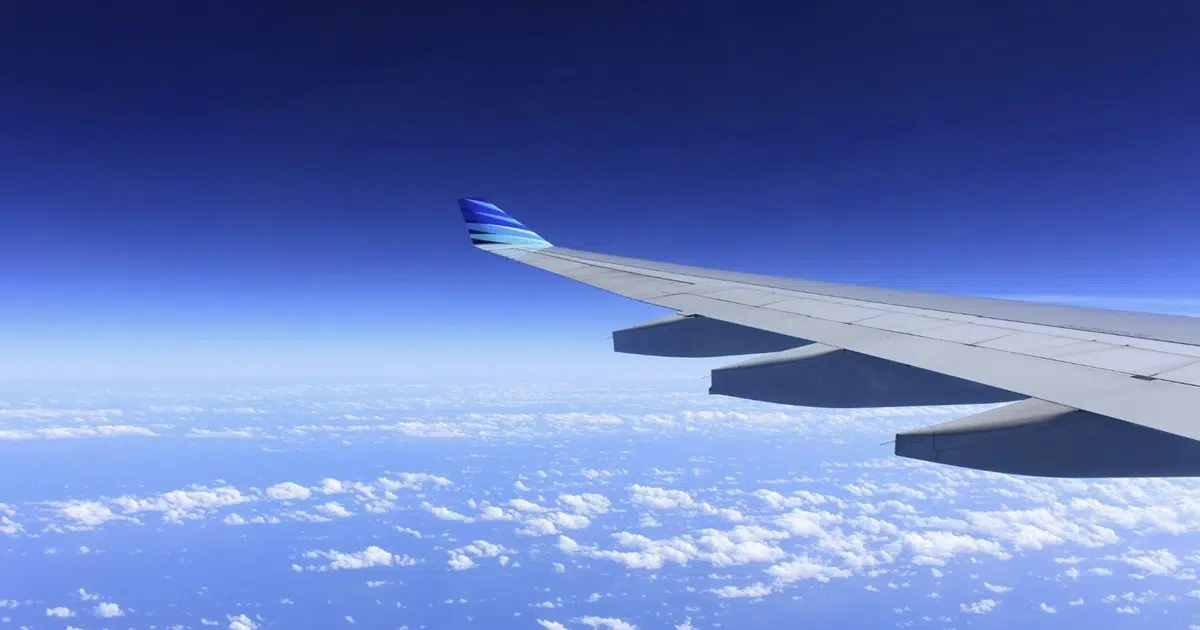
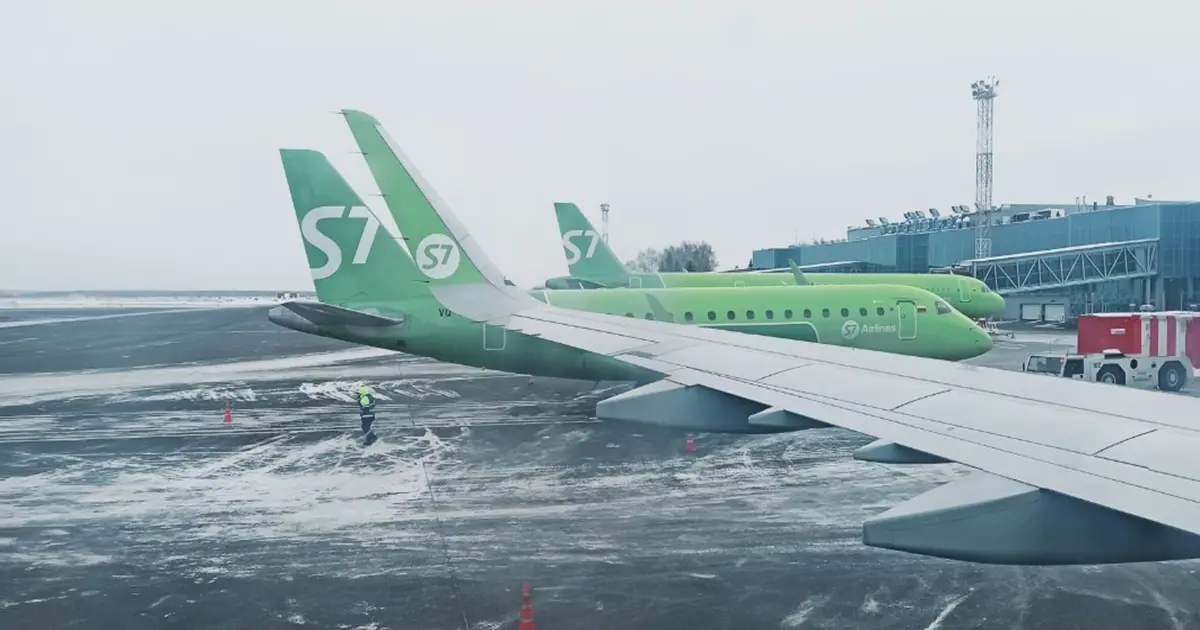
Green fluid on an airplane wing is the kind of sight that makes a nervous flyer grip the armrest. Even though it is usually a sign the crew is doing exactly what they should. Picture a cold winter morning, a window seat, and a wide metal wing just outside the glass. A truck pulls alongside, a boom swings over, and a bright liquid runs across the surface and drips off the back edge. It looks like something has gone wrong. In almost every case, it is the opposite. That colored fluid is a deliberate safety step. It is applied on the ground before the plane is cleared to leave.
So here is the plain answer before anything else: that green sheen is almost always de-icing or anti-icing fluid, not a leak.
Why Green Fluid on an Airplane Wing Shows Up Before Takeoff
Cold weather is the whole reason. When a plane sits in freezing temperatures, frost, snow or a thin glaze of ice can form on the wing surface. That might sound harmless. It is not. A wing is shaped to move air in a very specific way, and that smooth flow is what generates lift. Even a rough, frozen layer the thickness of sandpaper disrupts the airflow enough to rob the wing of lift at the worst possible moment. This happens during the climb away from the runway.
That is why the fluid goes on before departure rather than in the air. De-icing clears whatever has already built up. Anti-icing then leaves a protective layer behind so new ice cannot form during the wait to take off. Both jobs happen while the plane is parked or near the runway, with trucks and crews in view. By the time the wheels leave the ground, the work is done. The green you saw was the last line of defense being put in place.
Ice on a wing is one of those risks a passenger never thinks about until a truck appears outside the window. Crews, though, treat a frosty morning as routine work. There is a clear procedure behind it.
What the Color Actually Tells You
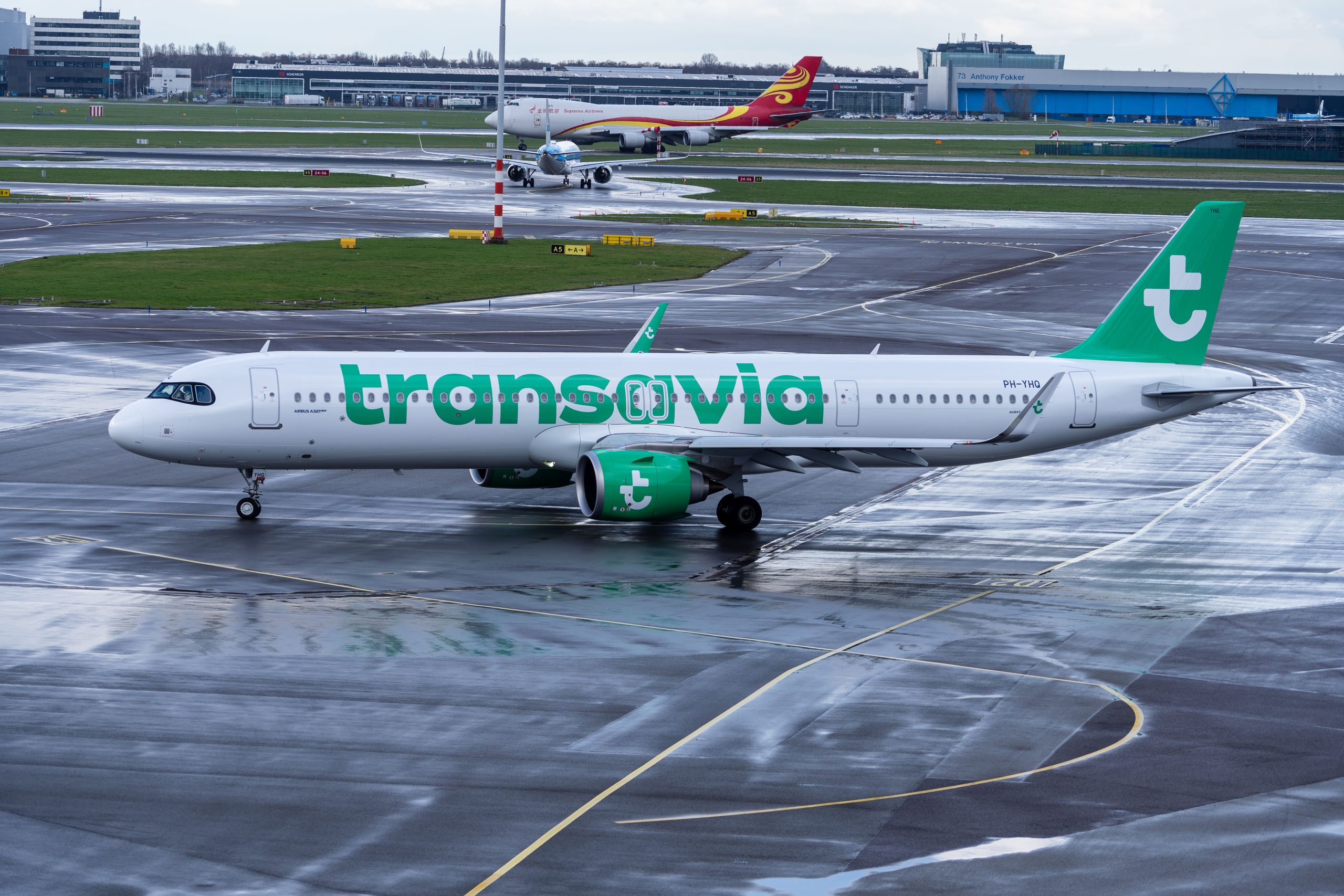
The color is not random, and it carries a rough meaning. Fluids used for this work are generally glycol-based, often built on propylene glycol. They are dyed so crews can see coverage against a wet wing. Type I de-icing fluid, the thin hot stuff sprayed to strip ice off fast, is typically dyed orange or a pinkish orange. The thicker anti-icing fluids, known as Type II and Type IV. They usually tend to run green or a pale straw color.
So green generally points to a thicker anti-icing fluid, the kind designed to cling to the wing through taxi and the queue for the runway. It then shears off as the plane speeds up. That is the general rule. However, it is worth being honest that the exact shade depends on the fluid type and the manufacturer. So the color is a strong hint rather than a guarantee. What stays constant is the purpose. This is a heated, dyed, glycol-based fluid sprayed by ground crews to keep the wing clean.
If you want the fuller version of why it looks the way it does, the color convention traces back to the standards that classify these fluids by thickness and holdover time.
The Leak People Fear, and How to Tell the Difference
Underneath the nerves is usually one specific fear: that the green liquid is a leak, maybe hydraulic fluid escaping from the wing. Some aircraft fluids are indeed dyed, which is where the confusion comes from. But the situation gives the answer away.
De-icing happens on the ground, in cold weather, with a truck parked beside the aircraft and a crew aiming a boom at the wing on purpose. It is sprayed on, from outside, in plain sight. A genuine fluid leak is a different kind of event. It is not a liquid being deliberately painted across the wing by a crew who want you to see even coverage. If there were a real problem, it would be handled by the flight and ground crews. It would not be left for a passenger to spot.
It is fair to say the precise identity of every colored liquid a traveler notices cannot be confirmed from a window seat. However, what can be said is that a bright fluid sprayed across a wing by a parked truck on a freezing morning fits de-icing far better than it fits a fault.
What Passengers See From the Window
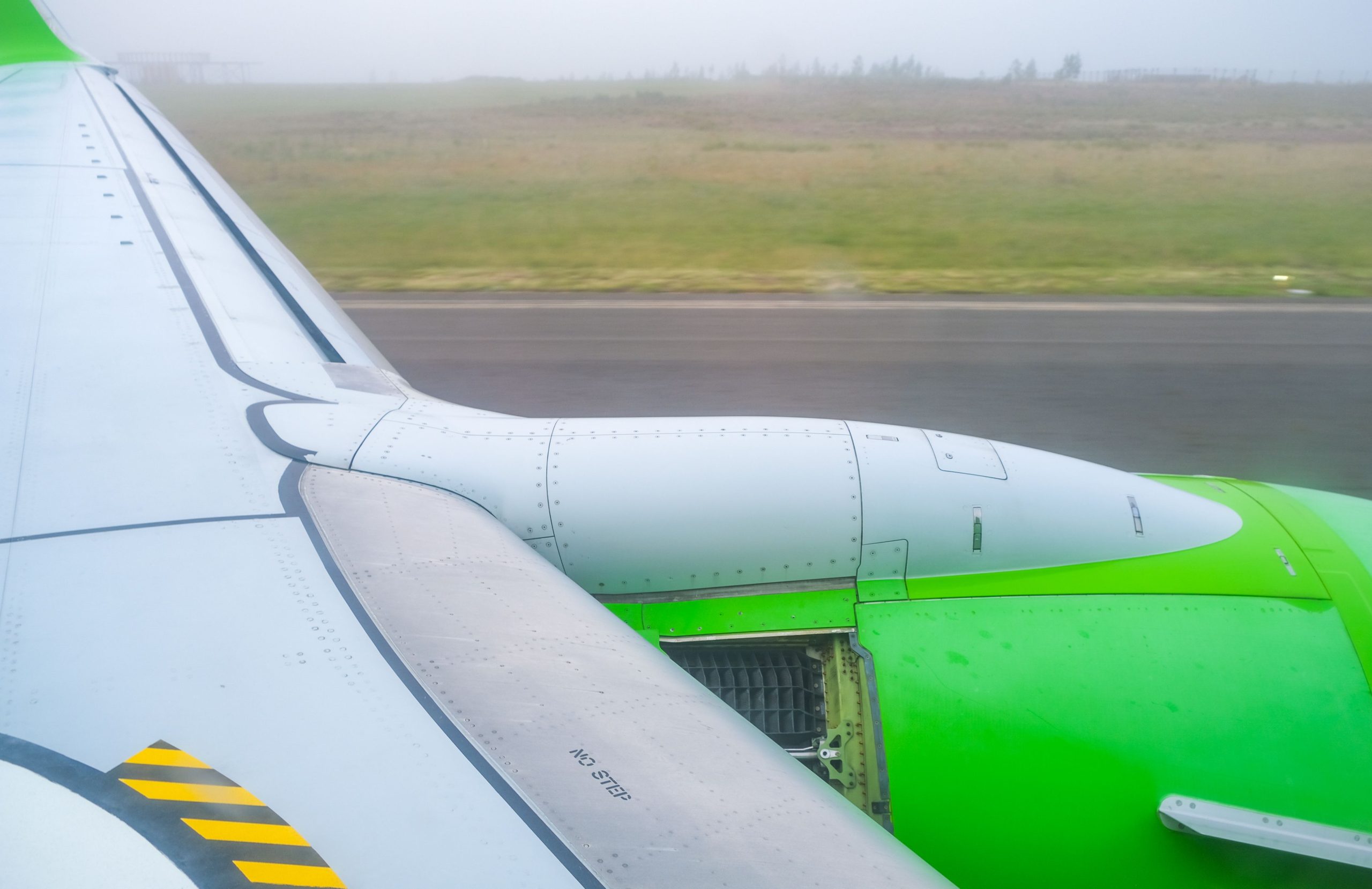
From seat height, the whole thing is oddly satisfying to watch. The spray trucks roll up, the articulated booms reach over the wing. The fluid sweeps across the metal and streams off the trailing edge in sheets. Then it is gone. By the time the plane lifts off, the anti-icing layer has done its job. It has shed away into the slipstream.
That window view fuels plenty of other questions too, like a small hole in the airplane window, and the ground rituals people notice before departure. For example, consider the habit of touching the plane before boarding. Most of what looks strange from the cabin turns out to be routine once you know what you are looking at.
The green sheen on a wing during a frosty departure is one of the last things a crew handles before the plane is cleared to go. This quiet piece of cold-weather housekeeping happens in full view. A window seat gives the clearest look at it: the truck, the boom, the fluid running off into the morning air, and then an ordinary takeoff.