The Strange and Beautiful Moth That Looks Like a Painting

September 23, 2026
Source: Ramnarayan K / iNaturalist
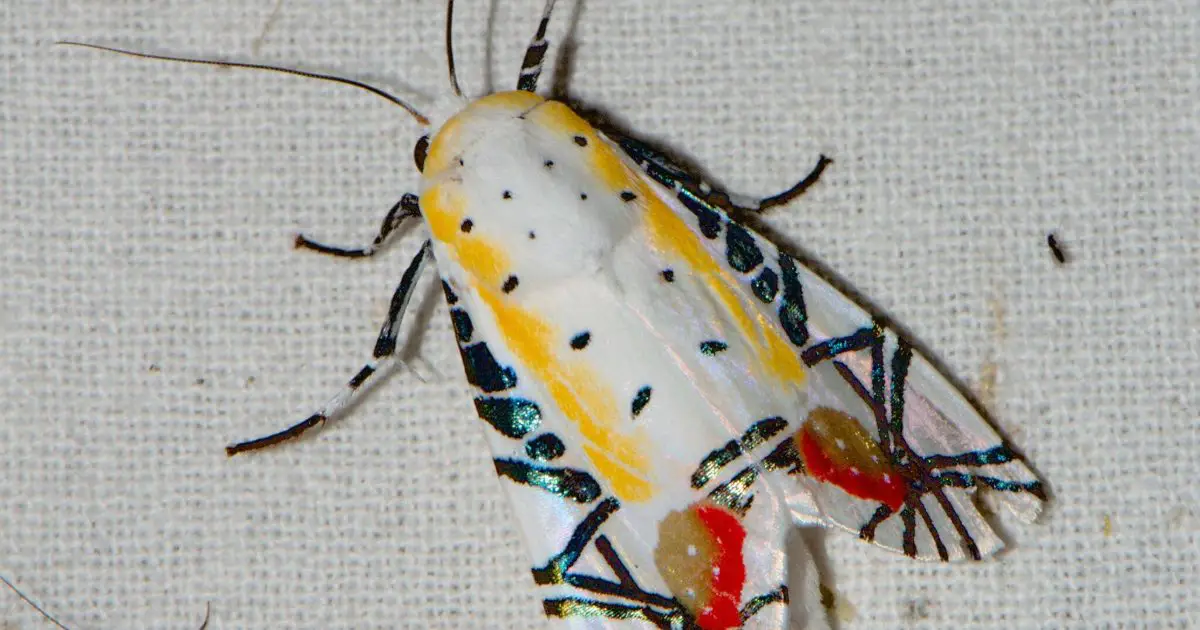
The Picasso moth looks so much like an abstract painting that plenty of people meet a photo of it and assume the image has been edited. The white wings carry yellow streaks, small coral dots and hard black lines, arranged with the kind of confidence you would expect from a brush, not from biology. It is not a render, not a costume, not a clever bit of digital work. It is a real, catalogued species called Baorisa hieroglyphica, and once you know it exists, it is hard to unsee.
What the Picasso Moth Actually Looks Like
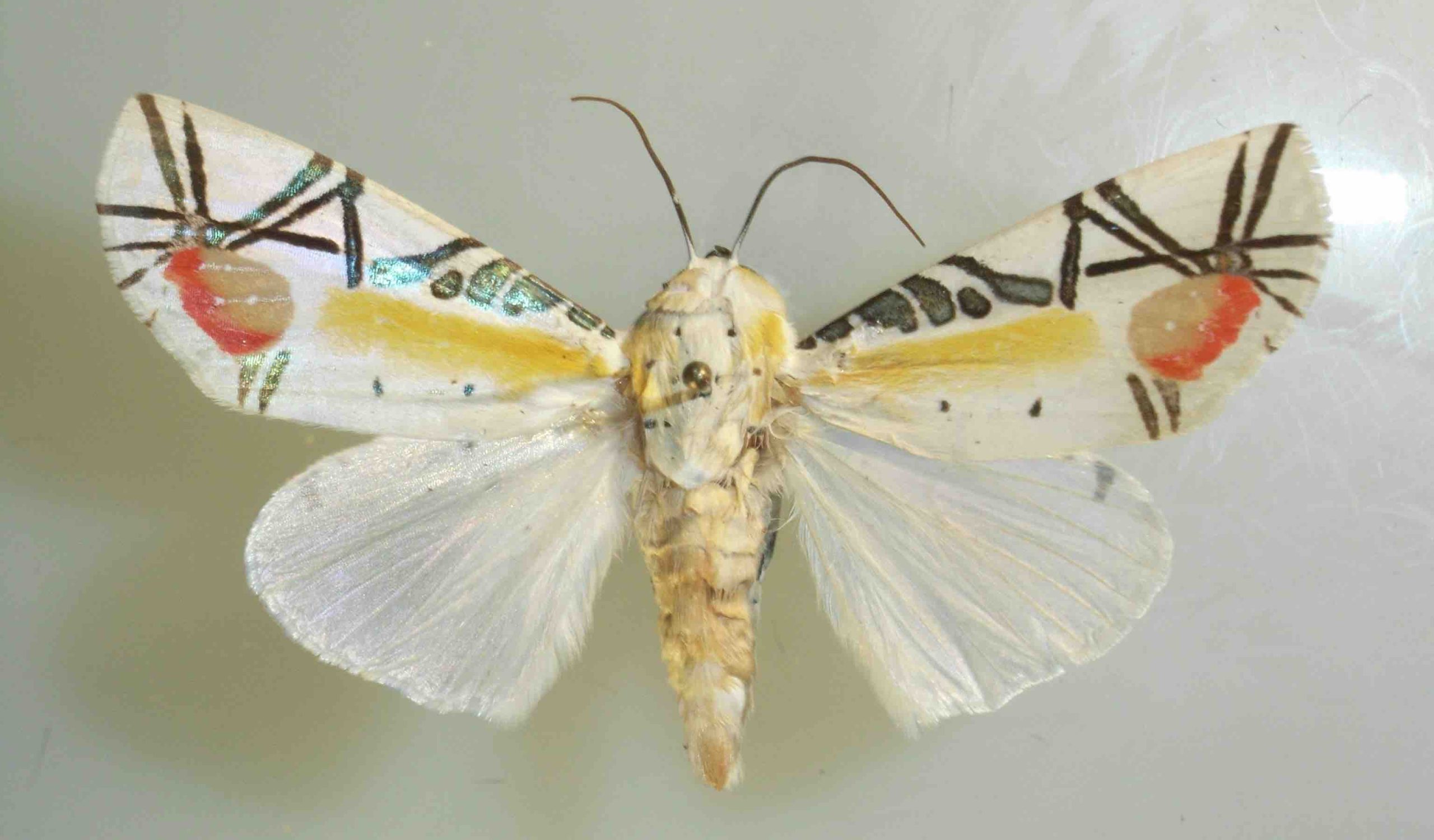
Start with the base color, a clean, almost paper-white across the forewings. Then come the marks that give the moth its nickname. Two yellow streaks run through the wing like someone dragged a loaded brush across it. Scattered coral-red dots sit near the edges, and thin black lines cut through the whole arrangement at sharp angles.
To human eyes, the effect reads more like deliberate abstract composition than ordinary camouflage. According to Smithsonian, its wingspan is roughly two inches, or about 5 centimeters. At that modest size, the amount of detail packed into the forewings is especially striking. It is easy to see why the Picasso moth ends up shared as if it were art someone signed.
The Scientist Who Named It in 1882
The British entomologist Frederic Moore formally described the moth in 1882. He worked extensively on the moths and butterflies of colonial-era India. The species name, hieroglyphica, is a fitting choice for an insect whose markings look like a written script waiting to be decoded, though the outline’s sources do not spell out Moore’s exact reasoning for the name.
The genus Baorisa was once considered monotypic, containing only B. hieroglyphica, but a 1996 revision described three additional species from the Philippines, Sulawesi and Flores. The taxonomy sits within the wider order Lepidoptera, the moths and butterflies, where it has kept its painterly reputation for well over a century.
Where the Picasso Moth Lives
The Picasso moth occurs across parts of South, East and Southeast Asia, with records from the northeastern Himalayas, Nepal, China, Indochina and parts of the Malay Archipelago. It is not a moth most people will bump into on a porch light in a suburb, which is exactly why its photos travel so far.
When someone in the region does spot one, the picture tends to land in an online identification thread with a caption somewhere between excitement and disbelief. That rarity feeds the viral cycle. Researchers have pieced together its known distribution from museum specimens, taxonomic records and modern observations, with documented records across parts of South, East and Southeast Asia.
Moth or Master Forger? Sorting Fact From Hype
A couple of things get muddled once the images spread. First, this is a moth, not a butterfly, despite how ornamental the wings look. Second, and more entertaining, a figure occasionally circulates claiming a wingspan of around sixteen inches. That number comes from a decorative textile product listing, not the animal. The real Picasso moth spans about two inches, and repeating the giant figure only helps a bad claim survive.
Even its family classification comes with a small asterisk. Depending on the reference you check, some databases classify the species under Erebidae, while others classify it under Noctuidae, a reminder that even documented insects can carry unsettled paperwork. The markings, though, are not in dispute. They are exactly as painterly as they appear.
The Picasso moth is one of many moths that quietly demolish the idea that the group is all dull brown wings. It sits alongside other real animals so striking that people assume a trick, like the blacknose sheep that look like stuffed animals. So the next time an unfamiliar moth turns up on a wall or in an ID thread, it is worth a proper look before deciding someone edited it.