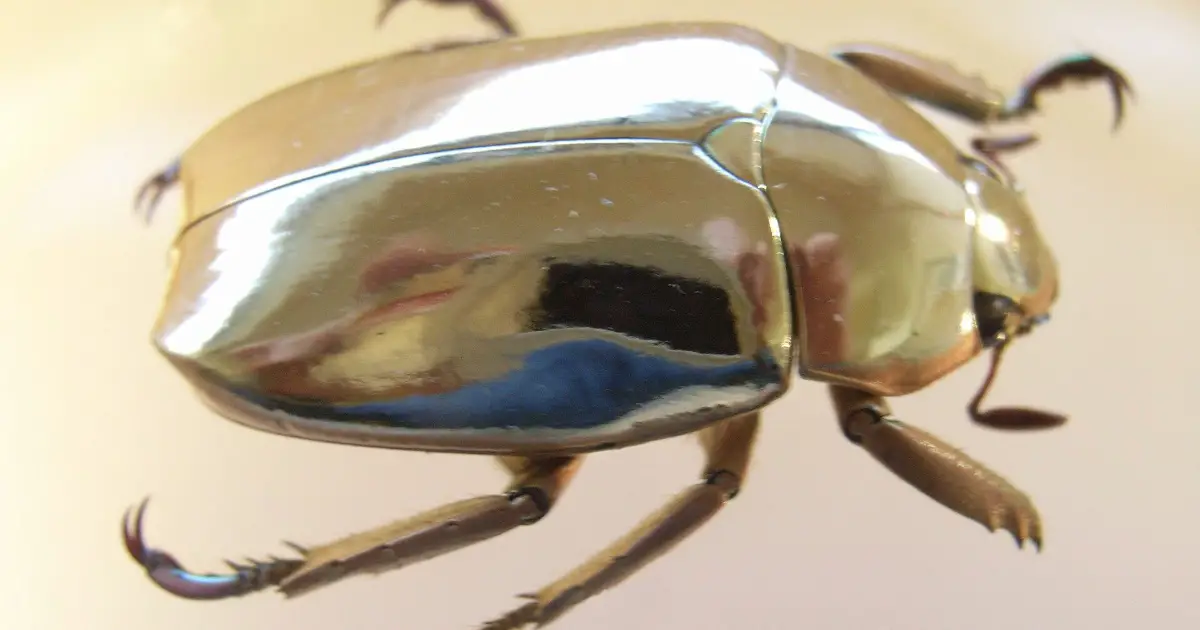
It was almost one in the morning when I saw the photo, and my first thought was that somebody had wrapped a beetle in foil for a joke. The shell looked like liquid chrome. Like a tiny motorcycle helmet had grown legs. The comment section was pure chaos too, people calling it “new drones in disguise” and “Beetle-Mark 1,” a whole thread convinced someone had dunked a bug in silver paint. I honestly assumed it was a render. It is not. That impossibly shiny insect is real, and it has a name: Chrysina limbata.
I went down the identification rabbit hole so you do not have to squint at blurry reposts wondering if your eyes are lying. They are not. It really does look like polished metal.
So What Exactly Is Chrysina limbata?
Chrysina limbata is a species of scarab beetle in the genus Chrysina, the group commonly called jewel scarabs. If you have ever seen those glossy green or gold beetles in a collector’s display case, same family vibe. This one just happens to wear silver.
The standout trait is obvious the second you look: a metallic, mirror-bright shell that reflects whatever is around it. At a glance it reads less like an animal and more like a bead of mercury with legs. Adults are small, on the order of a couple of centimeters long, so the effect is a little chrome jelly bean crawling across a leaf.
It belongs to the shining leaf chafer group, which tells you something about the crowd it runs with. Lots of shiny relatives. This one just took the metallic thing to an extreme most bugs never reach.
Where the Silver Beetle Actually Lives
Here is where a lot of the reposts get it flat wrong. I kept seeing captions calling this a “tiny African insect.” It is not African. Chrysina limbata is found only in mid-altitude forests of Costa Rica and western Panama. That is the whole known range.
Think cloud forest. Cool, misty, high enough up that water hangs in the air and clings to the leaves. It is a Central American specialty with a genuinely narrow footprint, which is a big part of why most of us will only ever meet it through a screen.
A limited range like that also explains the collector market and the constant amazement online. This is not a beetle you bump into on a camping trip in your backyard. If you are more used to dealing with the kind of bugs that actually invade the house, like pesky lady beetles clustering on your windows, the silver scarab lives in a completely different world.
How to Tell It From Look-Alike Jewel Scarabs
The genus Chrysina has a bunch of dazzling members, and a few of them get confused with limbata in comment threads. The one people mix it up with most is Chrysina resplendens, another Central American jewel scarab that is famously metallic too.
The difference is honestly easy once you know it. Limbata is silver, a cold chrome finish like a mirror. Resplendens is gold, a warm polished-brass look. So the quickest tell is just the color of the metal. Silver mirror means you are probably looking at limbata. Gold means you are looking at its glittering cousin.
The genus also includes green and other metallic species, so if the beetle in the photo is emerald or coppery, it is a different Chrysina again. But for the specific “is that thing chrome?” reaction that keeps going viral, the answer sits between silver limbata and gold resplendens. Match the metal, match the beetle.
Why It Looks Like Polished Chrome
Now the part everyone actually wants to argue about. No, nobody painted it. No, it did not fall into a vat of silver. The shine is the beetle.
That mirror finish comes from the structure of the exoskeleton itself. The shell reflects light naturally, which is why it genuinely bounces back its surroundings the way a chrome bumper does. When you see a photo where the beetle seems to hold a smear of green from a nearby leaf, that is the real thing happening, not editing.
In a wet cloud forest, that reflectiveness might even work like a droplet of water to a hungry predator, just a bright glint among all the other dew on the leaves. Which is a wild thought. A living animal that hides by looking like something spilled.
Recognizing It Next Time You See It Online
So the next time that chrome bug scrolls past and half the replies swear it is fake, you have got the cheat sheet. Silver mirror shell means jewel scarab. Jewel scarab plus silver, not gold, points to Chrysina limbata. And the range is Costa Rica and western Panama cloud forests, not Africa, no matter what the caption claims.
The photos are real, not renders. It really is that shiny in person. Look closely at a good close-up and you can usually spot the giveaway that settles the whole debate: a little green leaf, or the blurry pink of the photographer’s own hand, curved and reflected right there in the beetle’s back.