What Are These Strange Lights in the Sky?

September 20, 2026
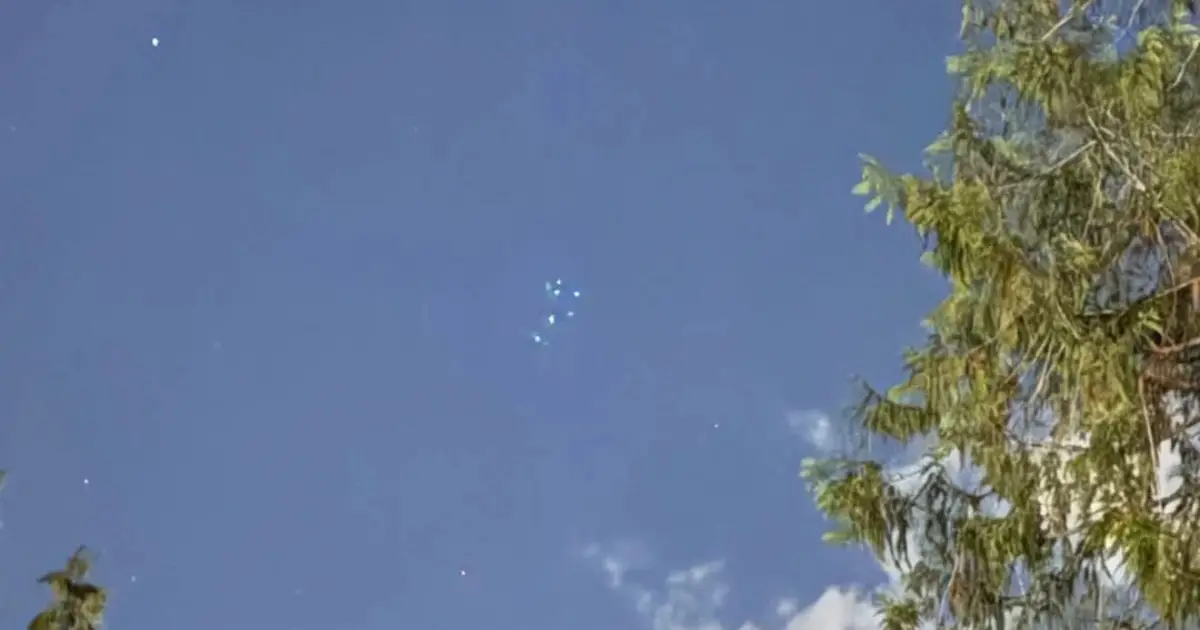
source: Reddit
That tight little knot of faint blue lights that photographs oddly on a phone and can easily be mistaken for a UFO or an unfamiliar satellite is the Pleiades star cluster, one of the easiest deep-sky objects to spot without a telescope. It turns up in the same kind of online post again and again, someone points a camera at the night sky, catches a small smudge of light that seems to shift color, and asks what on earth they are looking at. The answer is older than any satellite, older than any drone, and it has been hanging in the same patch of sky for as long as people have looked up.
People describe it as changing colour, flickering, or moving in a way that does not match a plane. That is worth taking seriously, because the confusion is real. But the object itself is not.
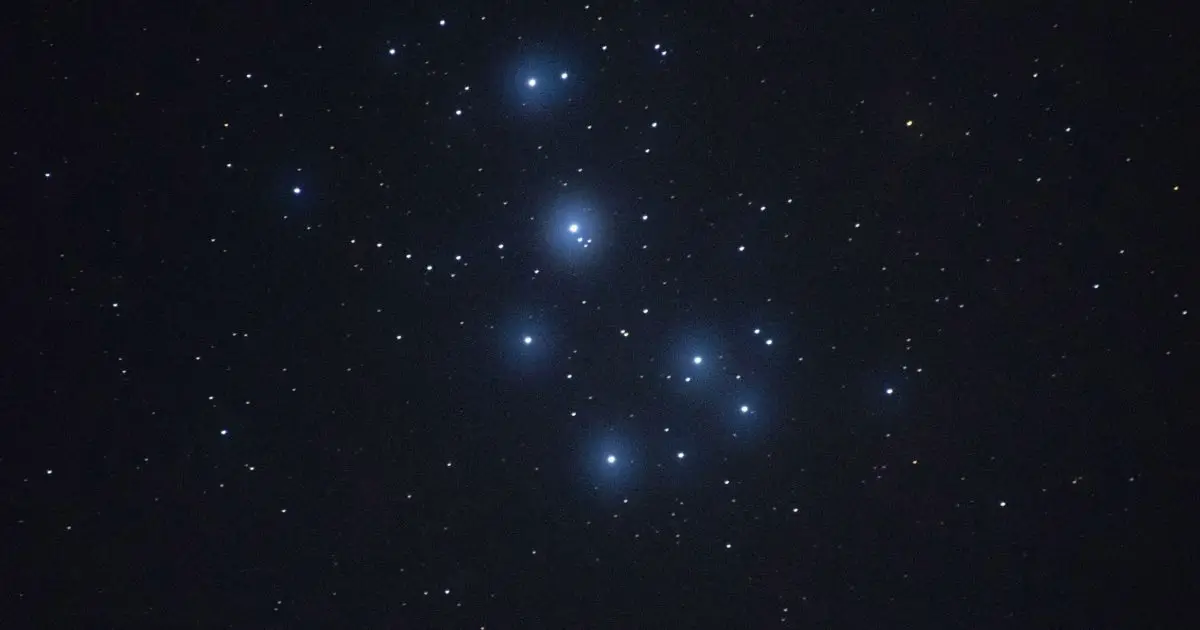
Why the Pleiades Star Cluster Looks So Strange at First
To the naked eye, the Pleiades star cluster reads as a fuzzy little patch rather than a crisp group of stars. Most people can pick out around six points of light, although some observers can see seven or more under good conditions. Look directly at it and it seems to dim; glance slightly to one side and it sharpens. That trick of vision alone is enough to make someone think the light is doing something unusual.
Near the horizon, the effect gets stronger. Air low in the sky shimmers and bends starlight, and a cluster sitting just above the treeline can appear to twinkle through a range of colours, blue, white, faint red. It genuinely looks like it is changing.
Phone cameras make it worse. A long automatic exposure smears the points into blobs, and small lens movements turn a fixed cluster into what looks like a hovering, drifting object. Add the fact that it does not match the steady straight-line track of a satellite, and a reasonable person lands on a reasonable-seeming wrong answer. It’s the same instinct that makes us stop and wonder about the white trails stretching behind airplanes.
What You Are Actually Seeing, 440 Light Years Away
The Pleiades is an open star cluster in the constellation Taurus, sitting roughly 440 light years from Earth. Sources put the figure slightly differently, some closer to 444 light years, which is why it is fairer to say “about 440” than to quote a single hard number. Either way, the light reaching your eye tonight left those stars centuries ago.
Astronomers catalogue it as Messier 45, or M45, though most people know it as the Seven Sisters. Despite that name, the cluster contains far more than seven stars. It contains more than 1,000 stars, according to the Royal Observatory Greenwich, and the brightest handful are young, hot, blue-white B-type stars. Their color is real, not a camera artifact, which is part of why the cluster photographs with that distinctive cool tint.
Wisps of blue haze around the brightest members become especially noticeable in long exposures. This is a reflection nebula, created as an unrelated cloud of interstellar dust scatters the stars’ light. To the naked eye, the cluster’s softer appearance mainly comes from stars that the eye cannot fully resolve individually. So the “strange light” is not one object at all. It is a young open star cluster containing more than a thousand stars, currently passing through an unrelated cloud of interstellar dust.
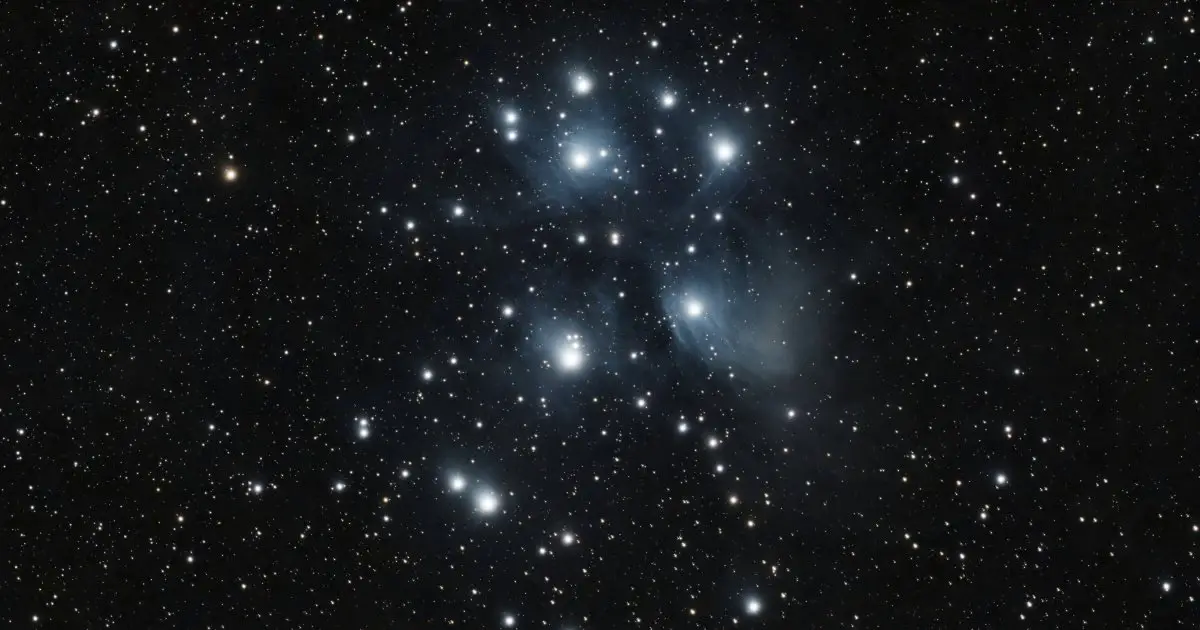
Cultures That Watched the Same Lights for Thousands of Years
None of this is new. The Pleiades is one of the most widely recognized sights in the night sky, named and tracked by cultures across the world for thousands of years. The familiar “Seven Sisters” name comes from Greek mythology, while traditions connecting the Pleiades with groups of sisters or other figures also appear in Indigenous Australian and some Native American cultures. In Japan, the cluster is known as Subaru and has traditionally also been associated with six visible stars.
For much of human history the cluster served as a practical landmark, used to mark seasons, guide planting, and time festivals. Long before anyone could mistake it for a satellite, people were building calendars around it.
To find it yourself, look toward Taurus on a clear autumn or winter night, away from bright streetlights. Use averted vision, let your eyes drift slightly to one side of the cluster, and it snaps into focus. Once you know what it is, the strangeness fades. What is left is stranger still: light that set out from those stars centuries ago, only reaching you now.