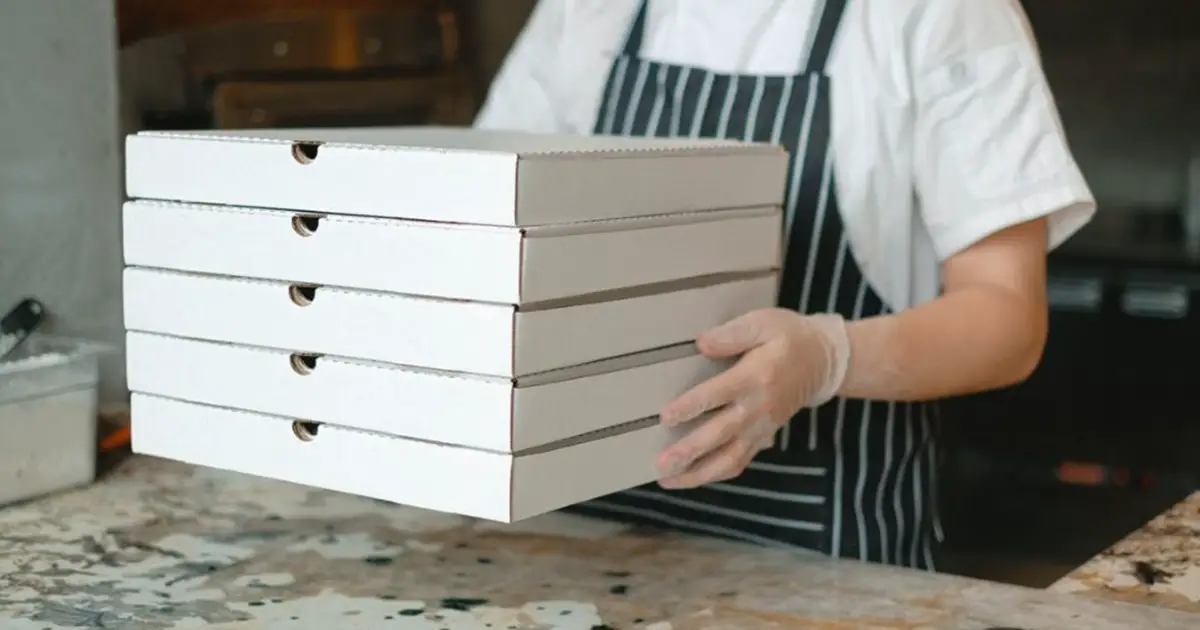
Pizza box holes are one of those tiny everyday details I managed to ignore for years. You pick up the box, smell the pizza, open the lid, and get straight to the important business. Who stops to inspect the cardboard? Definitely not me. But those little openings cut into the sides or lid of some pizza boxes are there for a surprisingly practical reason: ventilation.
Trust me, their purpose makes perfect sense.
A Hot Pizza Creates a Tiny Steam Problem
A pizza doesn’t stop releasing moisture when it leaves the oven. Put that very hot pizza into a closed cardboard box and warm, moisture-rich air becomes trapped inside.
As the pizza and box begin to cool, some of that moisture can condense. The humid environment also encourages the crust to soften. In other words, the box is trying to do two jobs that don’t cooperate particularly well: keep heat in while letting excess moisture out.
That is where those holes come in.
They act as vents, giving some of the warm, moist air a route out of the package. Packaging manufacturer Smurfit Westrock, for example, specifically lists ventilation holes as a feature used to remove moisture from pizza boxes.

Why Pizza Box Holes Can’t Simply Be Huge
My first thought was obvious: if steam is the problem, why not add much bigger holes?
Because then you create another problem. Your pizza cools faster.
A good pizza box has to strike a balance between ventilation and insulation. Too little ventilation can leave too much moisture trapped inside. Too much ventilation allows more heat to escape.
This isn’t just packaging folklore. A U.S. pizza-box patent issued in 1984 describes vents designed to let enough steam escape to help preserve crust quality while limiting unnecessary heat loss.
So those relatively small openings are intentional. The aim isn’t to completely air out the box. It’s to manage moisture without turning your pizza box into a drafty cardboard tray.
Do the Holes Keep Pizza Crispy?
This is where it’s worth being precise.
Pizza box holes can help reduce the conditions that make crust soften, but they can’t guarantee that a delivered pizza will remain as crisp as it was when it came out of the oven.
Time, temperature, the pizza itself, the box design, and how it is transported all matter. Steam can also become trapped underneath the pizza, where ordinary side or lid vents may not solve the entire problem.
In my experience, that’s exactly why a pizza eaten at the restaurant often has a noticeably different crust from the same pizza after a long ride home. The box can manage the problem, but it can’t stop the basic physics of a hot, moist food cooling inside a container.
Not Every Pizza Box Uses the Same Vent Design
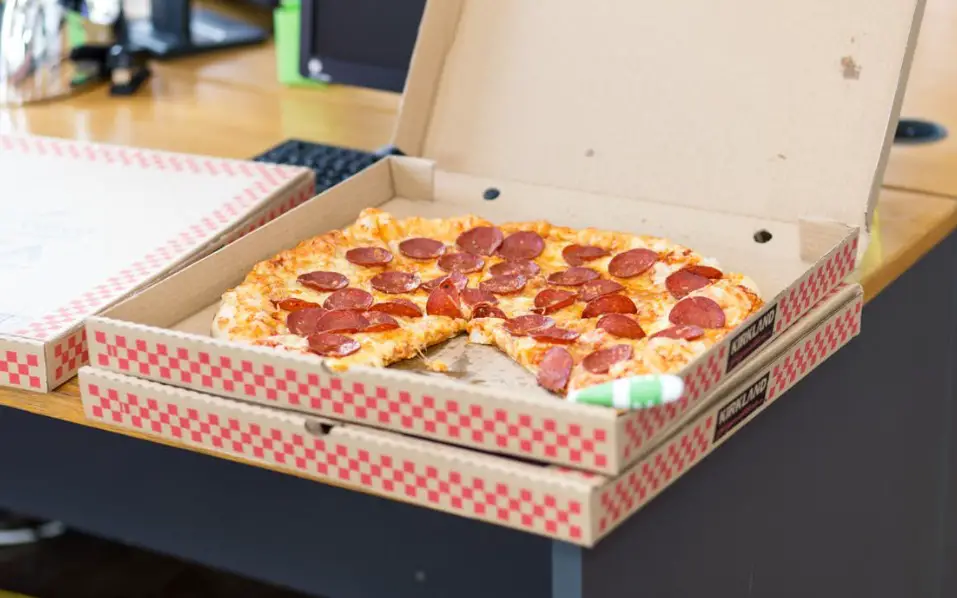
You might also notice that pizza box holes aren’t always in the same place. Some boxes have openings along the sides. Others use vents in the lid, and some specialized designs route steam through the corrugated layers of the cardboard.
There is another practical wrinkle. If ventilation holes are located on top, stacking another pizza box directly above them can obstruct those openings. Pizza-box expert Scott Wiener has pointed out this exact issue when discussing box design.
So there isn’t one universal hole pattern that every pizza box must follow.
The Box Is Doing More Work Than It Looks
Pizza boxes seem ridiculously simple. They’re folded cardboard holding dinner. But corrugated cardboard is popular partly because it provides useful rigidity and insulation while remaining relatively lightweight.
Add ventilation, and the humble box becomes a little exercise in heat and moisture management.
Trust me, you don’t need to start inspecting every pizza box before eating. I certainly won’t. But the next time you notice those small cutouts around the sides, you’ll know they’re not damaged sections or decorative details.
Those pizza box holes are vents. Their job is to give excess moisture and steam somewhere to go while the box continues doing its other important job: helping your pizza stay warm until you get to it.