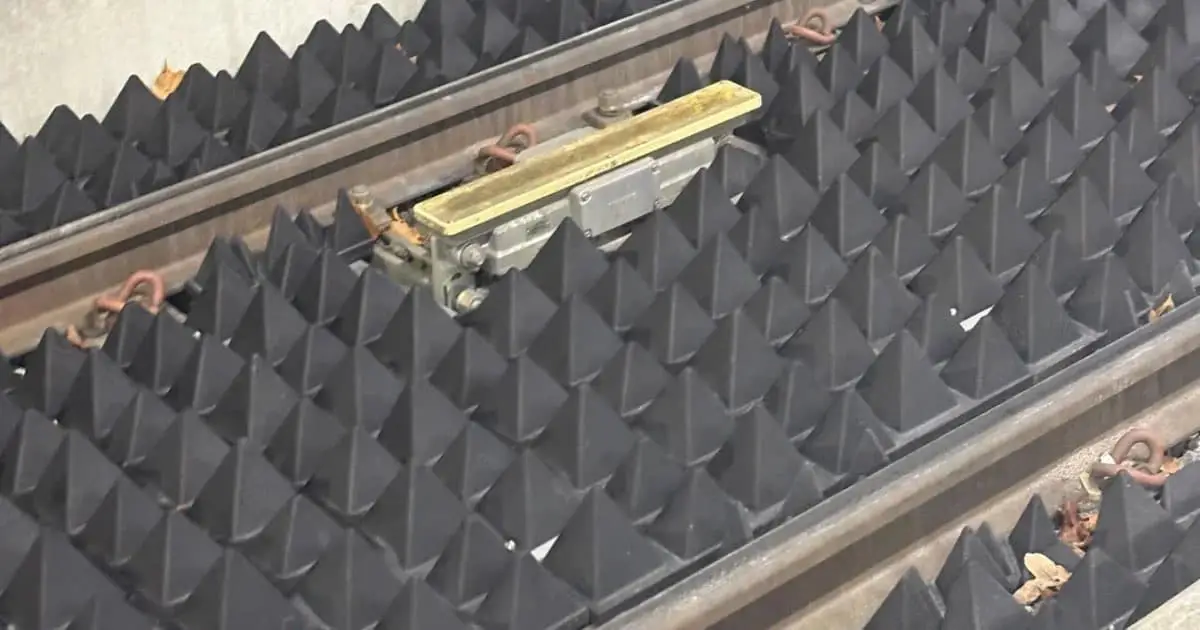
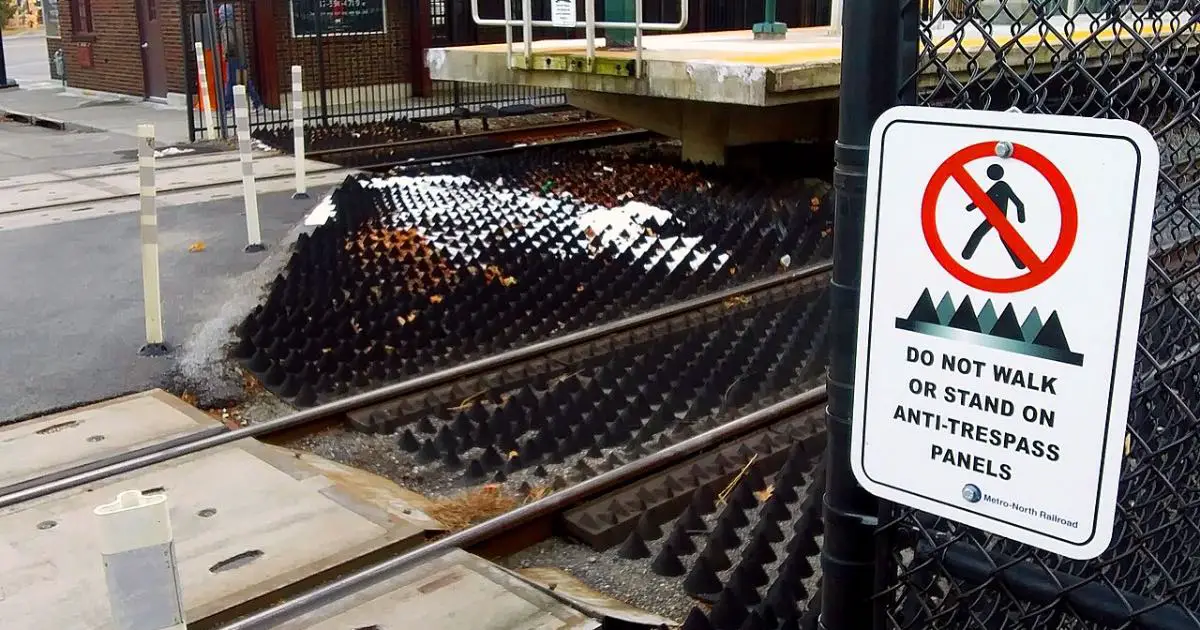
Those blunt black spikes set into the gap between the rails near a level crossing are anti-trespass panels. They do a job most travelers never think about. At some railway crossings and station platform ends, you may notice these unusual black panels. A run of squat, pyramid-topped mats fills the space between the running rails and spreads along the trackside. They look faintly menacing. They are meant to.
Most people pass them for years without a second glance. Once you know what they are, you cannot unsee them.
What Anti-Trespass Panels Actually Are
Anti-trespass panels are also known as anti-trespass grids or pyramid mats. PRISMA is the name of one commercially available anti-trespass panel system. The panels are covered with closely spaced raised pyramids or cones, creating an uneven surface that makes walking across them difficult and uncomfortable. Although their primary purpose is to discourage unauthorized access, they can also create obstacles for railway workers and emergency responders.
Depending on the design, anti-trespass panels can be made from recycled rubber, timber, or glass-reinforced plastic (GRP). They fit into the four-foot, the gap between the two rails, and along the ground beside the track. The result is an uncomfortable surface placed where someone might otherwise be tempted to enter the tracks.
Why Rail Lines Put Them There
Workers install the panels at spots where stepping onto the tracks is still easy: level crossings, platform ends, bridges, and gaps in trackside fencing. Fencing can help prevent unauthorized access along railway lines, but crossings and other necessary access points require additional safety measures. That open ground is where the mats earn their place.
They work on two levels at once. An unstable surface underfoot creates physical nuisance, and a clear visual signal warns that this is not a place to stand or stroll. That matters because the panels can discourage people from taking dangerous shortcuts or entering railway areas where pedestrians are not permitted. Independent research suggests that anti-trespass panels can reduce unauthorized access to railway tracks. A U.S. Federal Railroad Administration study recorded 38% fewer trespassing pedestrians after installation at one crossing, although researchers cautioned that further testing was needed before applying those results more broadly.
Anti-trespass panels do not completely prevent unauthorized access, which is why railway authorities often combine them with fencing, warning signs, and other safety measures.
How They’re Built to Last
The material choice is the interesting part. Recycled rubber gives old tires a second life, while GRP offers durability in demanding railway environments. Engineers choose both because the trackside location is brutal. Constant weather and heavy vibration from passing trains damage equipment there. Nobody wants parts that need regular attention in that environment.
Glass-reinforced plastic generally provides electrical insulation, while the electrical properties of recycled rubber depend on its composition. However, these properties do not eliminate the hazards of electrified railway equipment, and installation and maintenance must still follow railway electrical safety procedures. Durability and low maintenance are important design goals. Once installed, the panels can remain in service for years, but they still require inspections and occasional cleaning to ensure dirt, debris, or snow does not reduce their effectiveness. Different versions have been installed on railway networks in countries including the United Kingdom, Belgium, Sweden, and Australia, where authorities use them as part of broader efforts to reduce track trespassing.
Why You Notice Them Now
Here is the curiosity payoff. Once you recognize their distinctive shape, you may start noticing these panels at more railway crossings and platforms. They look dull and cheap, yet quietly do a serious thing.
Their intimidating appearance is part of their purpose. The raised spikes create an uncomfortable obstacle that discourages people from entering dangerous railway areas.
That is the clever part. These unusual panels make dangerous shortcuts less inviting while helping keep unauthorized pedestrians away from railway tracks. Their design must also account for railway workers and emergency responders who may need access to these areas.
Railway safety is full of surprising design choices, from these unusual panels to the reason most passenger trains don’t have seat belts.