A yellow border on a traffic light is one of those details. You stare at it for years at a red light without ever asking why it’s there. You’ve probably waited under one on a gray morning with your eyes drifting. You never noticed that bright frame around the signal head. It looks like trim. It looks like somebody wanted the light to pop. But the frame has a specific job. Once you know it, you start spotting it everywhere, at some intersections but not others across the same town.
It’s Not Paint, and It’s Not Decoration
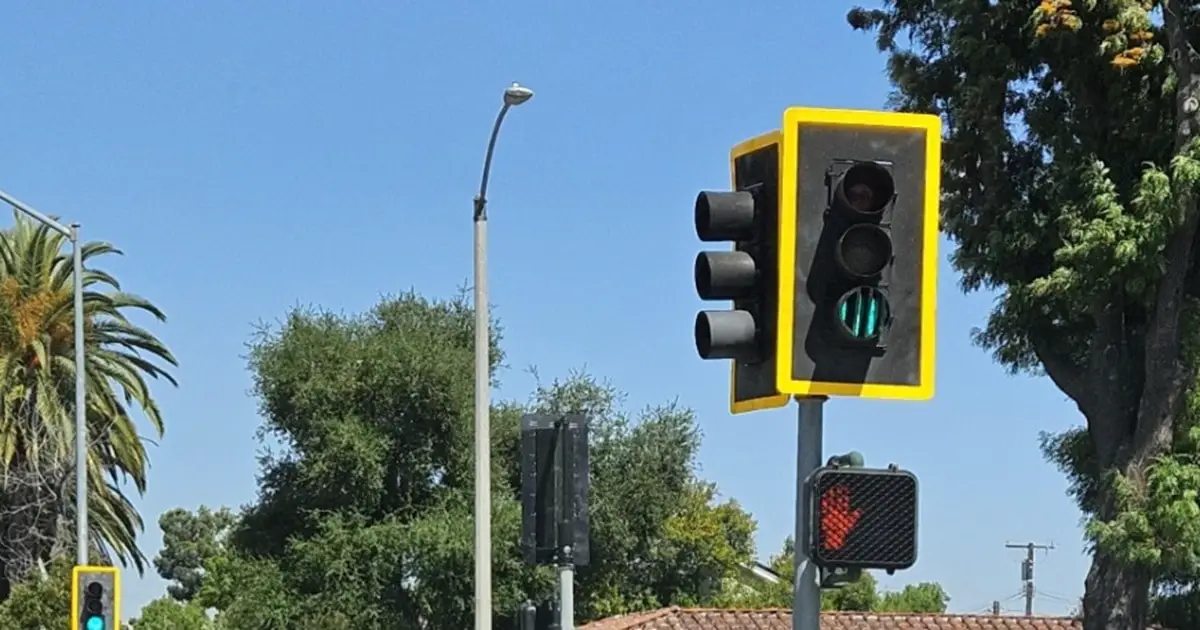
That yellow border on a traffic light is a strip of retroreflective material fixed to the backplate. The backplate is the flat panel behind the three lenses. It’s the dark rectangle that frames the red, yellow and green. The border runs around its outer edge.
Retroreflective is the key word. A mirror bounces light off at an angle. Retroreflective material throws light straight back toward wherever it came from. At night, your headlights hit that strip and it sends a bright line of yellow right back at your eyes. So the frame does nothing in the dark on its own, then lights up the instant a car approaches. It is the same trick a road sign uses, borrowed for the signal itself.
Why a Bright Frame Makes a Red Light Easier to See
The whole point is contrast. A traffic signal has to compete with everything around it, and sometimes it loses. Picture a red light hanging against a blazing sunset. Or picture it lost in a tangle of shop signs, neon and brake lights. The glow can wash out, and a driver’s eye takes a beat longer to find it. That beat matters at speed.
The border sharpens the edge. By outlining the signal head in high-contrast yellow, it gives the eye a hard shape to lock onto, which is the reason the frame looks the way it does. The signal reads as a distinct object instead of a smear of color in a busy scene, day or night.
This isn’t a local quirk or a contractor’s flourish. The Manual on Uniform Traffic Control Devices spells out the retroreflective backplate border. This federal rulebook keeps signs and signals consistent from state to state. The Federal Highway Administration maintains it. That’s why a frame in one city looks like a frame three states away.
Why You Won’t See It on Every Signal
Here’s the catch. The border is an option, not a blanket mandate. Many agencies added the frames after their own visibility reviews. They often did this at intersections with a history of trouble or heavy daytime glare. Others simply haven’t gotten to it, or saw no need.
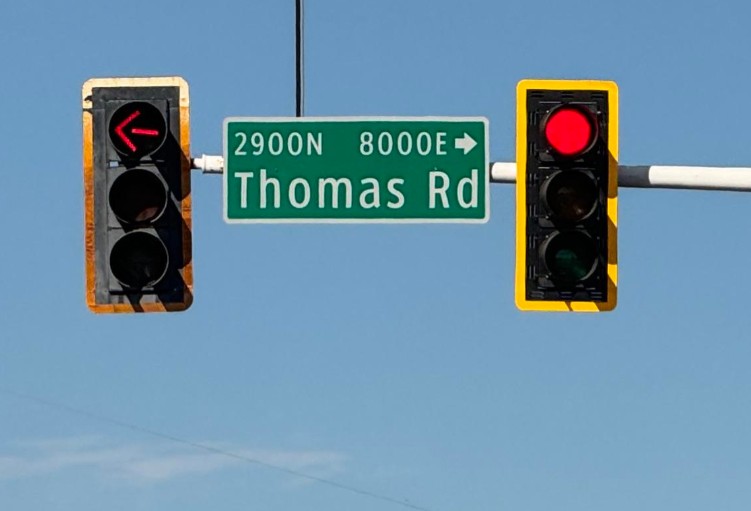
The same style of signal across town may wear no frame at all. That doesn’t mean anything is wrong with it. It just means the upgrade didn’t flag that intersection. That’s also why “a yellow border always means X” doesn’t hold up. The frame signals a visibility improvement, not a special rule about the light behind it. Traffic signals are full of these quiet features, like the puzzle of a traffic light glowing blue instead of green, that most drivers never think to question.
Next drive through a bright, cluttered intersection, let your eye settle on the signal heads for a second. Some will carry that fluorescent yellow outline and some will sit bare against the sky. The framed signals run a small piece of engineering for you. They pull a hard edge out of a messy background so your eye finds the red a fraction sooner. It asks nothing of you and you’d never notice it working. That fraction of a second is the entire point.