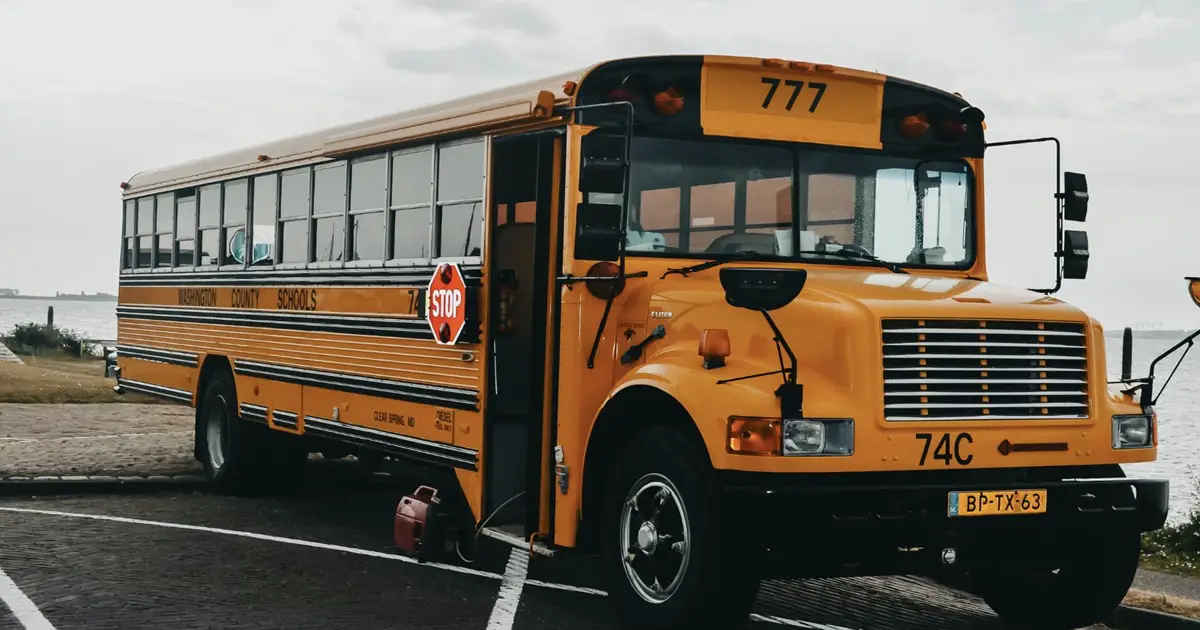
School bus black stripes are one of those everyday details I somehow managed to look at for years without really seeing. You know the ones: those long, dark horizontal bands running along the bright yellow sides of a traditional American school bus. I used to assume they were simply part of the paint scheme. Yellow bus, black trim. Case closed.
Except they’re not merely decorative stripes.
Those black bands are generally known as “rub rails,” and they’re physical components attached to the outside of the bus body. Their main job is to reinforce and protect the sides of the vehicle. Depending on the bus and the rules under which it was built, rub rails can appear around the floor, seat, windowsill, or lower body-skirt areas.
And, yes, there’s a popular story about firefighters and the stripes that needs a little clearing up.
The School Bus Black Stripes Are Actually Rub Rails
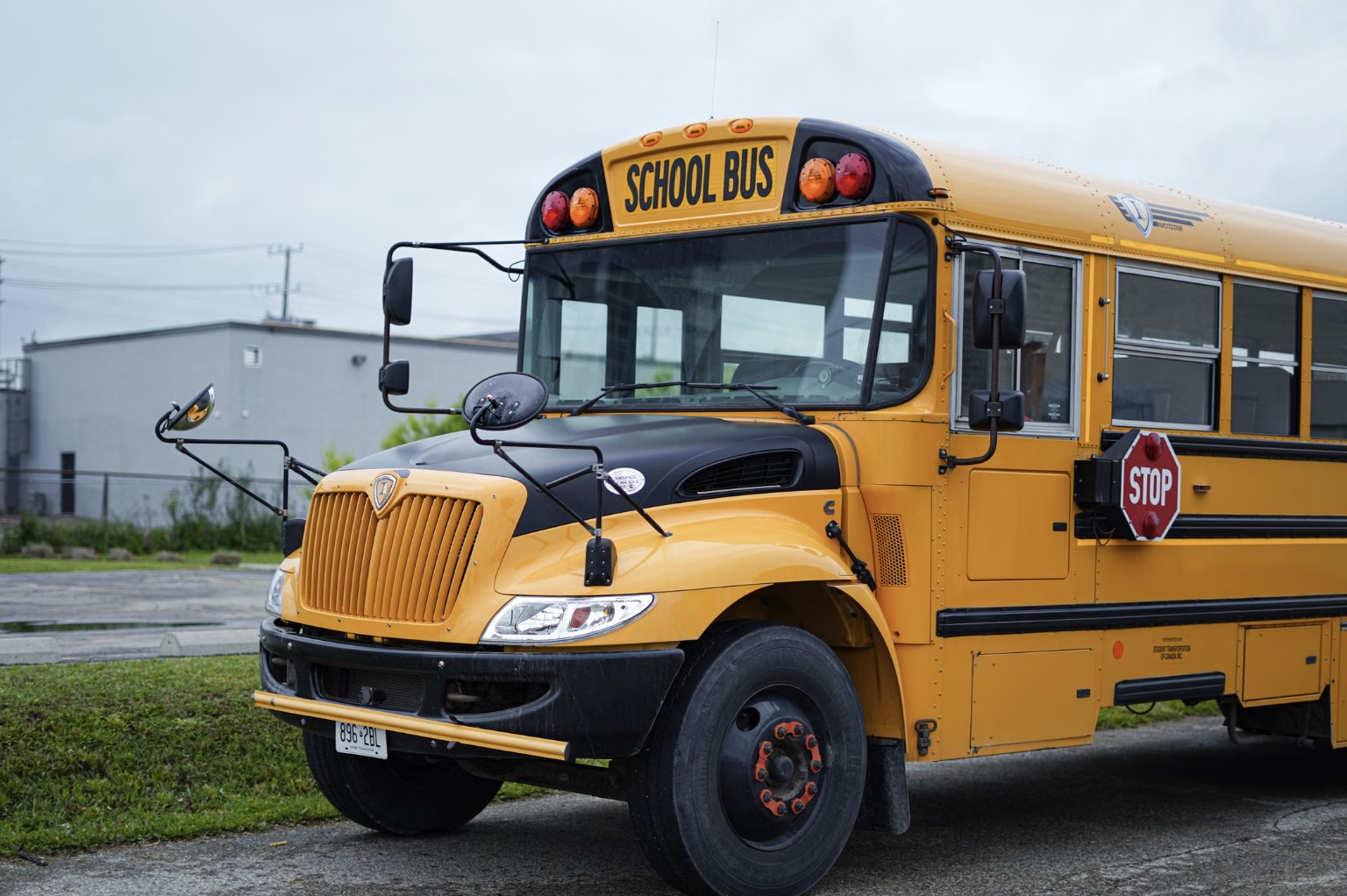
If you get close enough to a school bus, you’ll notice that the black “stripes” often aren’t flat painted lines at all. They’re raised rails running horizontally along the body.
That distinction is important.
School bus construction specifications in several states describe these rails as structural or protective pieces. For example, Pennsylvania regulations require rub rails approximately at seat level, at the floor line, and low on the body panel. Georgia specifications have similarly required externally applied rails at locations including seat and floor levels.
Some specifications get surprisingly detailed. Georgia’s rules, for instance, have called for certain rub rails to be made from corrugated or profiled 16-gauge steel or equivalent material. Alabama specifications have required rails at least four inches wide and made from 16-gauge metal or another material of equivalent strength. In addition, Alabama describes them as suitable for protecting body side panels from damage.
So, despite looking a bit like styling, these rails have a practical purpose.
Why School Buses Need Rub Rails
Think about the side of a bus for a second. It’s a large expanse of bodywork carrying passengers, and it needs a strong, durable structure.
Rub rails help reinforce that exterior and protect the side panels from damage. The National Highway Traffic Safety Administration (NHTSA) notes that most school buses have rub rails attached to the exterior surface of the bus body. Interestingly, NHTSA’s testing documentation distinguishes the rails from components that actually enclose the occupant space. This is useful because it prevents us from exaggerating what the rails do.
In other words, calling them some kind of magical crash-proof shield would be misleading. They are one part of a much larger bus structure.
That was one thing I wanted to be careful about when digging into this subject. It’s very easy to turn a simple engineering feature into a dramatic internet “secret.” The real explanation is less mysterious, but honestly, I find it more interesting.
Do the Black Stripes Show Where the Seats Are?
Here’s where things get slightly messy.
You may have seen social media posts claiming that the black rails precisely identify the floor, bottom of the seats, and top of the seats so firefighters know exactly where to cut into a bus after a crash.
There is a grain of truth mixed with an unsupported conclusion.
Rub rails really can be positioned around important interior levels. Wisconsin, for example, requires a rub rail at seat-cushion level and another around the floor line. Pennsylvania likewise specifies rails approximately at seat level and the floor line. Arkansas rules have called for four black rails. These include ones at seat level, near the floor line, below the side windows, and at the bottom of the body skirt.
But that does not mean the rails are universal, precision-coded markings showing emergency crews exactly where every seat component sits.
Fact-checking by Snopes found that while the rails may generally correspond with floor and seating areas, their primary purpose is structural support and protection. Snopes also reported finding no evidence that emergency responders universally rely on the stripes as cutting guides during rescues.
Trust me on this, that distinction is worth remembering because the firefighter explanation gets repeated online as though it’s an established nationwide design rule. The available evidence doesn’t support making that claim.
Why Are the Rub Rails Black?
The familiar yellow-and-black combination certainly makes the rails easy to notice. However, even here, it’s best not to assume every bus everywhere follows exactly the same specification.
School bus requirements can differ between jurisdictions and bus types. Arkansas regulations, for example, explicitly specify black rub rails. Other regulations focus more heavily on their location, dimensions, construction, and attachment.
That variation is another reason broad claims such as “every school bus has exactly three black stripes” aren’t reliable. Some specifications call for two primary rails, while others require additional rails at the windowsill or lower skirt. Bus design also varies by type and manufacturer.
A Small Detail With a Very Practical Job
From my own research, the simplest way to remember all this is: those school bus black stripes are usually raised rub rails, not ordinary decorative paint.
Their exact number and placement can vary, but their core purpose is practical. They reinforce and help protect the sides of the bus, with commonly specified locations around the seat and floor levels.
I have to admit, I love details like this. Something can sit right in front of us for years, on the morning commute, outside schools, in traffic. Then one tiny question makes the whole thing more interesting.